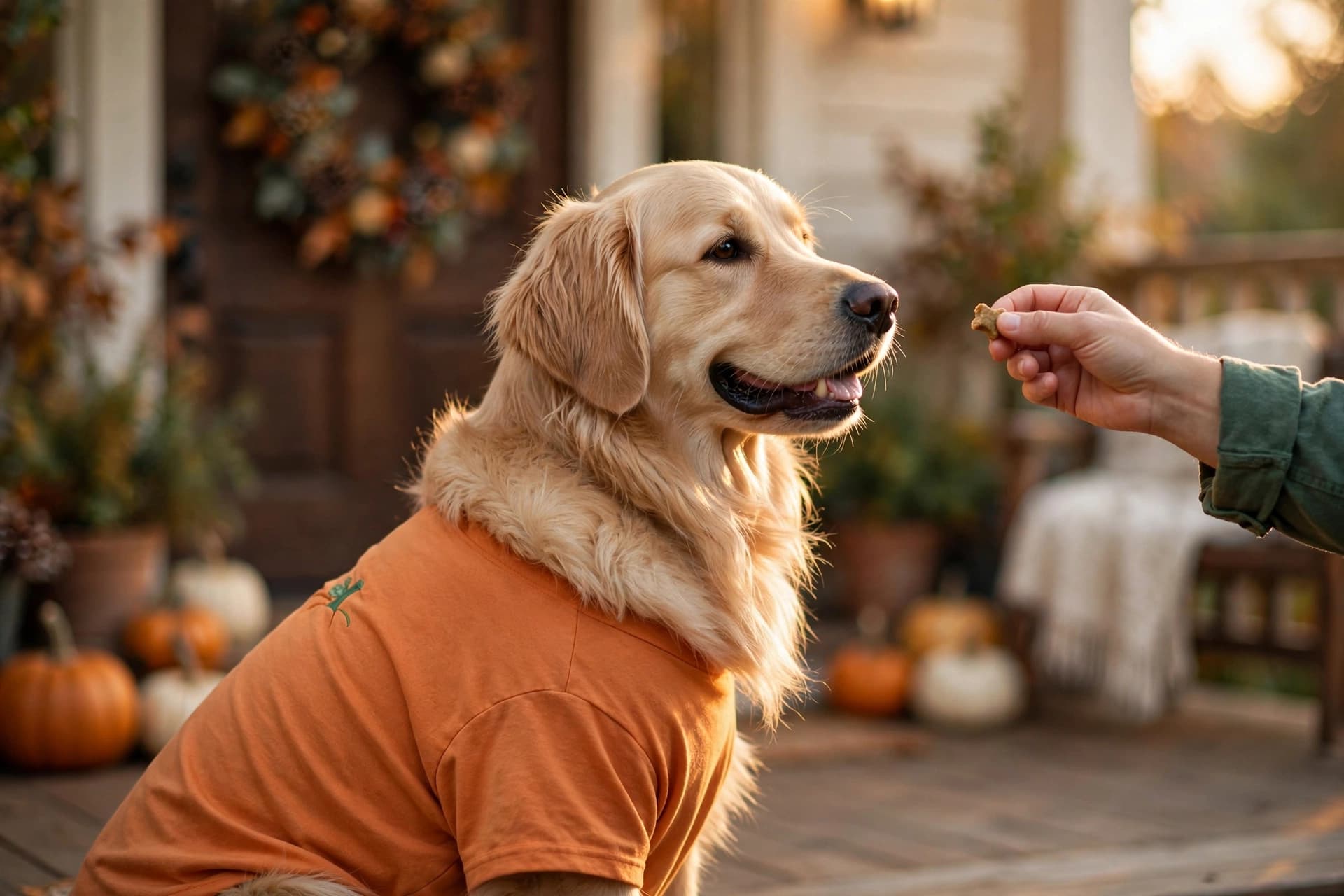
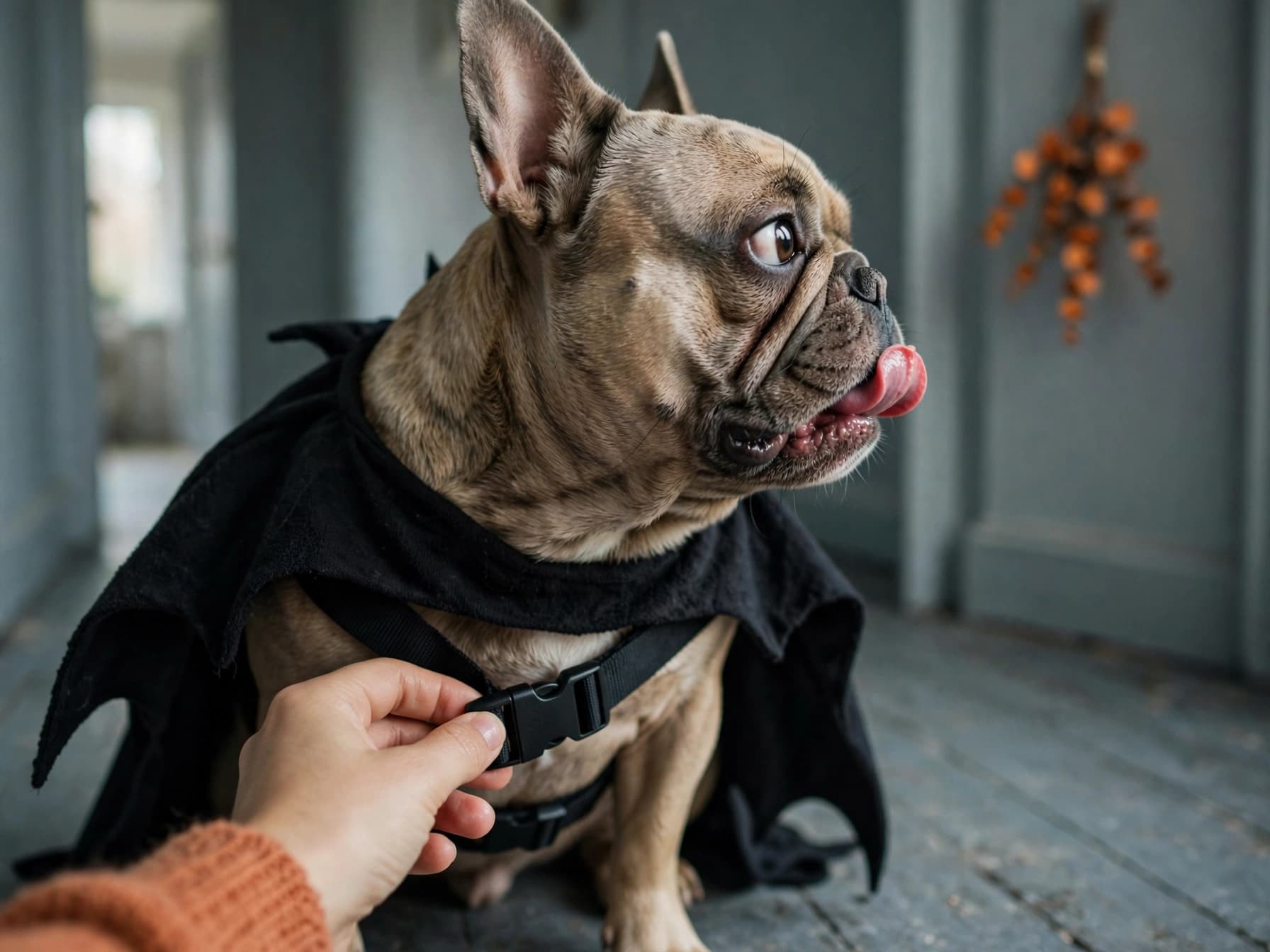
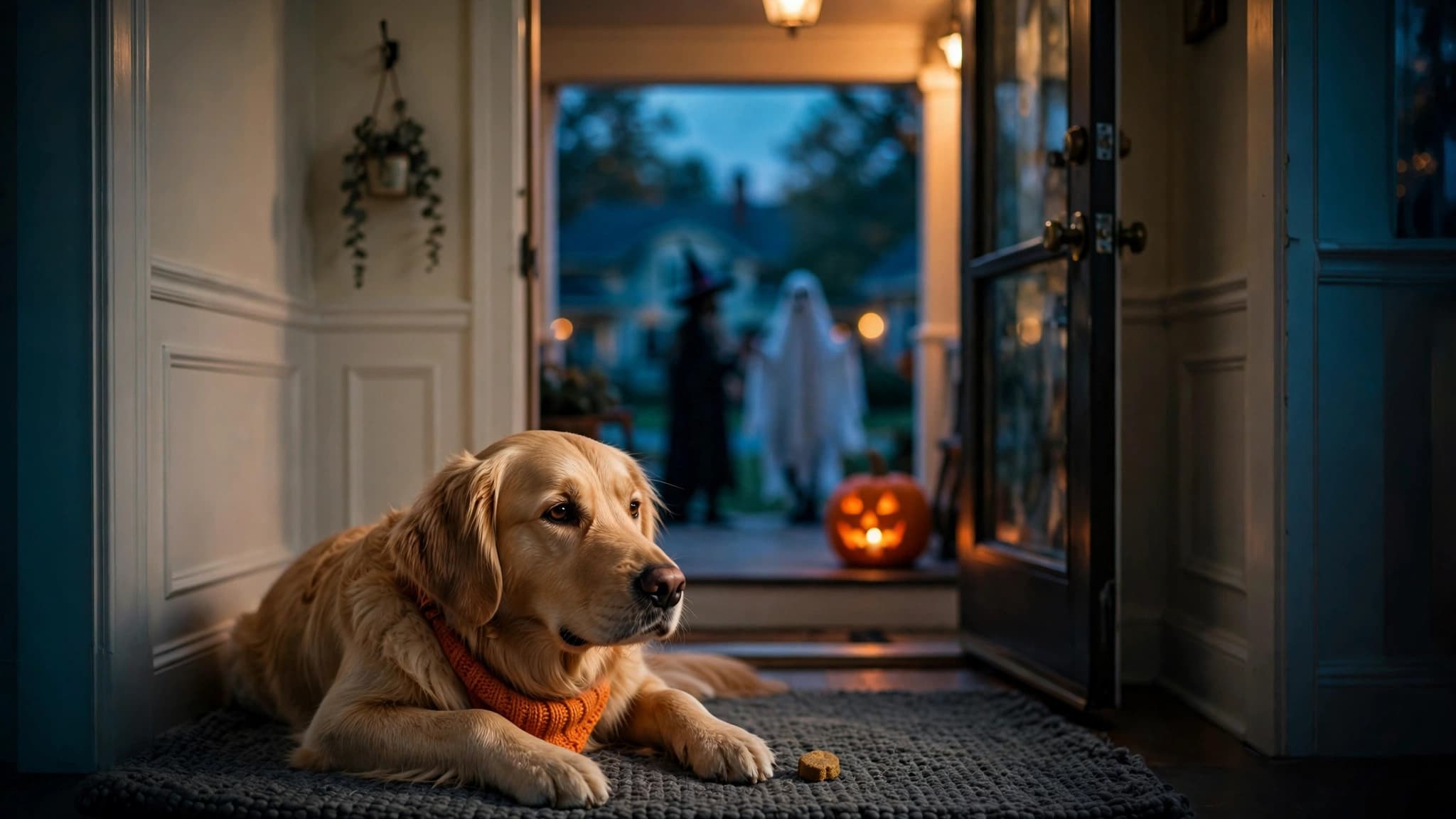
It is mid October, the porch pumpkins are on, and your group chat is awash with hot dog dressed up dogs. It is estimated that Americans will spend nearly $920 million on pet costumes in 2026 (Source: National Retail Federation, 2026 Halloween survey). What is cute on the aisle may become a frozen, stiff, and mopey pup, at home. This tutorial will demonstrate how to select an outfit that your dog will wear.
Quick Answer: Select a light, stretchy costume that is tight without constricting and does not cover the face, legs and tail of your dog. Present it at least two weeks beforehand with treats, and remove it when your dog freezes, paws at it, or is unable to settle. You can use a bandana as an alternative to dressing up your dog when you are not sure she likes it.
Comfortable Halloween Costumes for Dogs: What to Look For
A costume may be witty, but it has to pinch, itch or obstruct the sight of your dog, and then it will not last to the next photo. The true test of good pick is comfort.
According to the ASPCA, a costume must not restrict a pet in terms of their movement, vision, or breathing and barking capabilities and it says that a headpiece is not advisable (Source: ASPCA Halloween safety tips). It also recommends not doing dress-up at all unless you are sure your dog likes it (Source: ASPCA). According to American Kennel Club (AKC), what shy or reserved dogs need is to be at home and be at ease in their normal fur (Source: AKC).
Then consider your dog and his character before you go to the mall. A dog that is a strong candidate is a social, treat-loving dog. A dog that jumps scares easily or does not like to have the paws touched, may be happier with a bandana or nothing.
Fabric and Feel
Soft and stretchy: Cotton, jersey and fleece blends move with your dog and are unlikely to rub.
Light on layers: A thick suit on a warm evening may cause overheating and the AKC warns of costumes that cause overheating of dogs (Source: AKC).
Nothing to drink: Do not eat hanging ribbons, bells, buttons, glitter and loose elastic. They may end up being choking hazards (Source: ASPCA, AKC).
Smooth-interior: Snip off scraped labels and inspect seams of clothing.
Face-free design: The eyes, ears and nose are to remain uncovered.
A Fit That Works
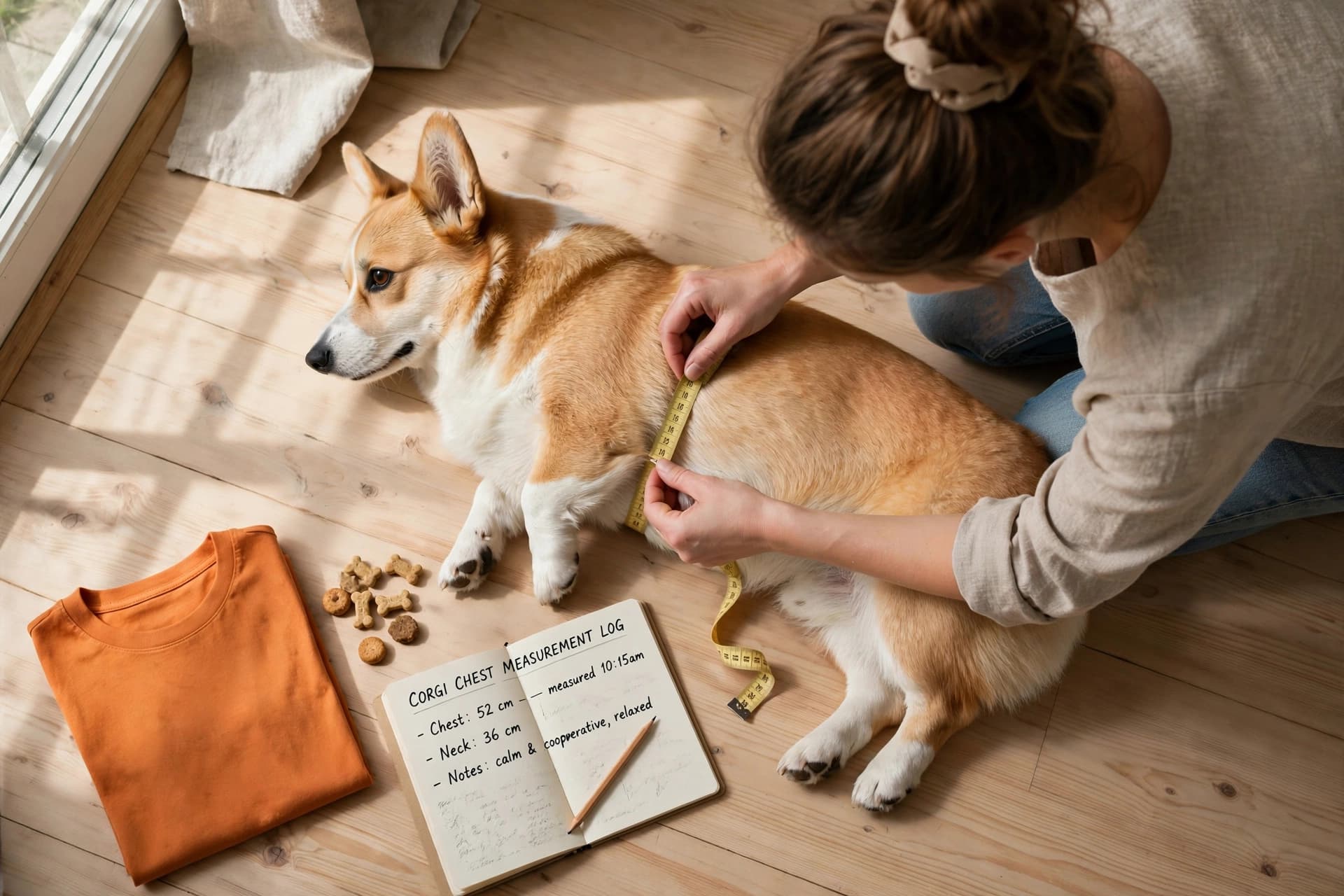
Measure your dog before purchasing, with a soft tape and a couple of treats to keep your dog happy:
Neck: above the base, where there would be a collar.
Chest: above the ribcage, and just behind the in front legs.
Back length: distance between the base of the neck and the base of the tail.
Compare your numbers with the size chart of the brand. When your dog is in between sizes, you should choose the bigger one in a stretchy fabric.
Once it is on, you would be in a position to slide two fingers under any strap. Your dog must be capable of sitting, lying, walking, and going to the pee without cloths getting in the way.
Easy Halloween Costumes for Dogs That Stay On (Best Styles)
Certain clothes slide, wriggle or even end up torn in the yard. The designs that remain best do so due to the manner in which they are constructed and not because they are fastened tight.
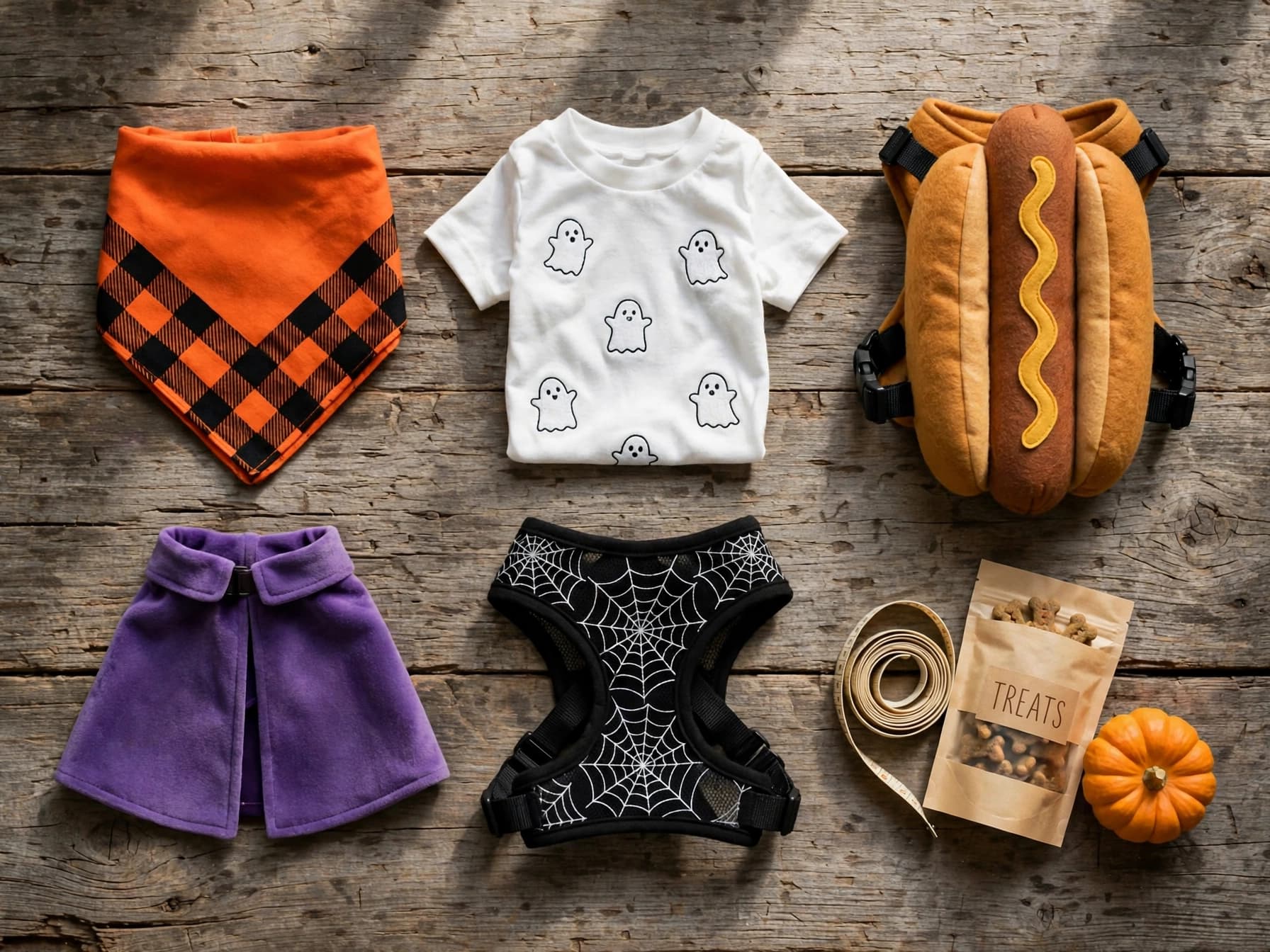
The most common pet costumes this season are pumpkins, hot dogs and ghosts (Source: NRF). They are both simple, close-fitting and this makes a clever template to any pup.
Style
Stays in place?
Header 3
Best for
Bandana or bow tie
Very high
Very high
Shy dogs, first-timers, warm weather
Stretchy tee or onesie
High
High
Most dogs, especially short coats
Harness-style costume (wings, cape, “bun”)
Very high
High
Active walkers who need a leash-ready outfit
Cape or skirt
Medium
High
Calm dogs who don’t mind swishing fabric
Full-body suit
Medium to high
Low to medium
Tolerant dogs on cool nights
Hat, mask, or headpiece
Low
Low
Skip for most dogs
Every small detail of design counts:
Large, plush closures: Hook-and-loop belly bands are thicker than elastic and dig in.
A leash opening: Attach the leash to the harness of your leash, never to thin costume material.
Fit too snug: Long trailing tails and capes may be stepped upon and snagged.
The shake test: Walk, sit, shake with your dog. In case the outfit twists or slides, readjust it.
Bandana warning: According to the AKC, bandanas are only to be worn with a supervision since they might get caught in something (Source: AKC costume guidance).
Lightweight tee usually fits tiny dogs well, as it provides some warmth without being bulky. Our Chihuahua training guide is a useful read-along, should you have a small pup. Want a harness or ID tag prior to the big night? Browse our pet gear guides.
How to Get Your Dog Used to Wearing a Costume (Step by Step)
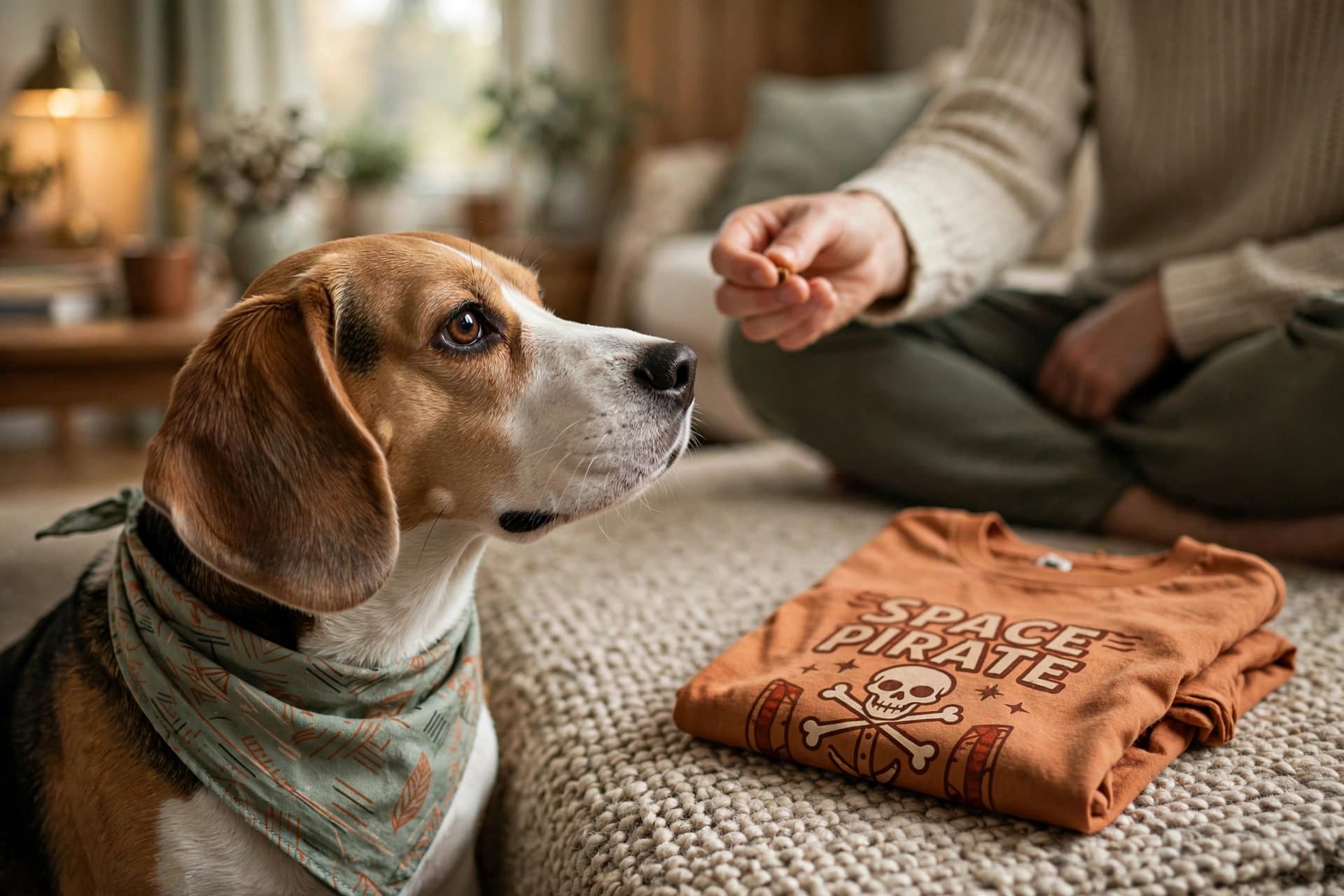
An outfit that fits well and is given as a surprise flops. The AKC suggests purchasing a costume two weeks prior and to introduce it gradually so that your dog associates it with treats (Source: AKC).
Below is a simple two-week program that you can modify to your dog:
Day 1-2, encounter the costume: Place it on the floor. Reward your dog by sniffing it, and then take it away.
Day 3-4, touch and drape: Place it on the back of your dog a couple of seconds, reward, and take it away.
Day 5-6, Wear it: Wear it 10 to 20 seconds, treat and remove it before fussing begins.
Days 7-9, time and fun: Increase time up to a few minutes as you play, practice sits or walk through the house.
Days 10-12, do it outside: It is time to go on a short leash walk in the yard or on your street.
Days 13-14, dress rehearsal: Wear the entire outfit, including accessories, 10 to 15 minutes. Now take your photos.
Provide high value rewards such as small amounts of cooked chicken and make each session brief. Always stop when your dog is still relaxed. When your dog is not cooperative at some stage, revert to the last stage and continue a day or two.
Never force it. In case your dog continues to freeze or to run after two weeks, change it to a bandana and consider the victory. Need a reminder of the basics of reward-based? Read our dog training instructions.
Signs Your Dog Hates Their Costume (and What to Do)
Your dog can’t ask you to take the outfit off, but they communicate constantly. The trick is to spot warning signs before they degenerate into panic.
Lip licking and yawning may be signs of early stress, according to the ASPCA canine body language guide, which notes that a tight mouth accompanies both behaviors. The same guide includes exhibiting the whites of the eyes, panting, and a pulled tail as the signs of tension or fear ( Source: ASPCA ). A very scared dog can stand still ( Source: ASPCA).
What you see
What it may mean
What to do
Lip or nose licking, yawning when not sleepy
Early stress
Pause, offer a treat, and consider removing the outfit
Whites of the eyes showing, head turned away
Tense and uneasy
Remove the costume and let your dog settle
Freezing in place, refusing to walk
Overwhelmed
Take it off right away
Pawing, scratching, rolling, or chewing at the outfit
Irritated by fit or feel
Remove it and check for tight spots or itchy seams
Rapid panting, drooling, trembling, tucked tail
Fear or overheating
Remove it and offer water in a cool, quiet spot
Another recommendation by the AKC is to take off a costume when your dog constantly attempts to remove it (Source: AKC).
The dog that freezes is not behaving well. Freezing is also commonly an indicator of stress, and hence should not be confused with cooperation.
When you see trouble, don't fuss and take off the outfit even without a reprimand. Give water and a rest and consider what disturb your dog. Was it the cloth, or the harness, or the circumstance? In case it was a mild reaction, you can attempt a looser or a lighter one in future. In case it was good, omit the costume. Call your veterinarian, in case your dog appears to remain ill despite the removal of the outfit.
Dog Halloween Costume Safety Tips for Trick-or-Treat Night
The night of Halloween brings noise, strangers, and candy to the equation and thus some planning would keep everybody safe.
Keep an eye on it: Do not leave your dog alone in a costume (Source: AKC).
Check each time you wear: Check loose strands, chewed ends and tiny pieces that may be detached.
Select a quick-release design: The outfit should be able to be removed in seconds in case your dog panics.
Keep the ID accessible: The ASPCA advises pet owners not to allow pets to run off because of crowds and bizarre outfits, thus to ensure that their tags are up-to-date (Source: ASPCA). Another level is added with a GPS tracker and our AirTag vs. Fi collar comparison can assist you in choosing one.
Keep the candy safe: Chocolate and sugar-free candy has xylitol, which is harmful to dogs (Source: ASPCA). In case your dog eats candy or costume pieces, contact your veterinarian or the ASPCA Animal Poison Control Center at (888) 426-4435.
Prepare a no-no place: The ASPCA suggests that all but the friendliest dogs be kept in another room that is not located near the front door when trick-or-treating is at its peak (Source: ASPCA).
Test the prediction: On a hot night, opt with the lightest or do away with layers.
What to Do If Your Dog Just Says No
Leaving out the costume is quite an acceptable option, and your dog will be grateful. You may have them in the game yet:
Add a festive bow tie or a supervised bandana.
Change to a themed collar charm, leash, or harness.
Have a photo with a small pumpkin or a Halloween puppy sign next to them.
Pair up and match your personal costume to a dog without a costume.
Play with a chew or stuffed puzzle toy that is safe as the doorbell sounds.
The Bottom Lines: Choose the Clothes Your Dog Hardly Notices.
The most fashionable costume is the one which is hardly noticed by your dog. Select soft, light and simple, practice a week or two, and honor the cues that your dog conveys. A win is a win. Each Halloween night has its own set of challenges, and before the doorbell begins to ring, brush up on our guide to doorbell desensitization in dogs and help your pup remain calm the whole evening.
ASPCA: “Halloween Safety Tips”. Costume fit, choking hazards, headpieces, chocolate and xylitol, ID tags, quiet room, and the Animal Poison Control number.
How to choose a Halloween costume for your dog if they’ve never worn clothes?
Begin with the easiest solution, a loose, stretchy tee or a bandana of the correct size and choose a design that allows the face, legs, and tail to be completely uncovered. Take measurements of your dogs neck, chest and back length before shopping and then practice using treats during a period of two weeks before the night of Halloween.
What are the signs your dog hates their costume?
Characteristic indications are freezing up, licking the lips, yawning, or exposing the whites in the eyes, curled tail, heavy breathing, and chewing or gnashing of the garb. Should you encounter a few of these in one place, do off the costume most quietly, and allow your dog a rest.
How to get your dog used to wearing a costume before Halloween?
Slow: have your dog sniff the outfit, then lay it over their back, and spend a few moments in wearing one of its parts, of course with treats. You can gradually increase the duration by one to two weeks and then take a break when your dog is stressed out in order to ensure that each session finishes on an uplifting note.
What are the most comfortable Halloween costumes for dogs?
Lightweight, stretchy tees, plain bandanas, and capes that fit under harnesses with the legs, face, and tail exposed are the most comfortable. Fleece or soft cotton fabrics that lack scratchy trim, hanging parts or tight elastic are likely to be best tolerated, particularly during hot weather.
Is it safe to put a costume on my dog?
Yes, but not when the costume does not limit movement, vision, hearing or breathing and you have your dog closely monitored all the time. First, look to see whether there are small, hanging, or chewable bits and take off the outfit immediately in case your dog appears upset or hot (Source: ASPCA, AKC).
Should my dog wear a costume while trick-or-treaters come to the door?
Typically not, as doorbells, strangers, and surprise costumes can even intimidate sure-footed dogs. A lot of dogs are happier in an empty back room with a chew or puzzle toy and the costume can be reserved to take pictures before the doorbell begins to ring (Source: ASPCA).
Founder & Lead Pet Care WriterPeer-Reviewed & Tested
Written by Valentina Johnson
Valentina Johnson is a lifelong pet lover and writer who shares practical, easy to follow pet care tips for everyday owners. Her advice comes from years of raising her own pets, backed by real research and conversations with vets and trainers along the way. She's not a veterinarian, and always encourages readers to check in with one for anything serious. At the core of it all is one simple belief: every pet deserves a happy, healthy home.
Halloween lands on Saturday, October 31, 2026. Use this simple four-week, treat-based training plan to help your dog stay calm through every ring, knock, and costume. It also includes a quiet-room backup plan for the big night.
Chihuahuas are now America's most popular dog, and they're smarter than their reputation. Discover simple, reward-based lessons for potty habits, barking, nipping, and leash walking, so your tiny pup becomes a polite, confident companion at home and on the sidewalk.